

For auto dismantlers
The ready-made dismantler solution combines Business Reactor + AutoParts with an internal used-parts registry and VIN lookup. Every removed component receives an individual record showing its donor vehicle, actual condition, compatibility, location and sales availability.
What the parts registry stores
- the donor vehicle and its VIN;
- a link to the relevant AutoParts catalogue position;
- the original number, cross-references and alternatives;
- name, attributes and photos;
- the actual condition and completeness of the individual used item;
- warehouse, zone, shelf or another exact storage location;
- price and status: available, reserved, sold or returned;
- reservation, order and customer history.
How a new item enters the registry
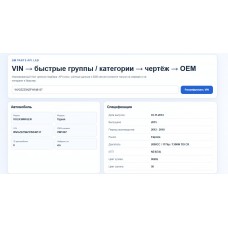
An employee opens the donor vehicle and its VIN. AutoParts identifies the component and provides ready reference information, numbers, cross-references, alternatives and photos. The employee then records actual condition, completeness, internal photos, price and storage location.
There is no need to invent every name or build the reference catalogue from zero. AutoParts already contains millions of components, while the dismantler adds data about the actual item in stock.
How an employee selects a part for a customer
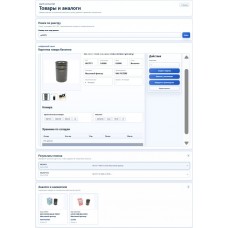
The employee enters the customer vehicle’s VIN. The system displays the required catalogue position, original numbers, cross-references and alternatives, then checks the dismantler’s internal registry. One screen shows compatible used items, their condition, photos, price and storage location.
This reduces the risk of selling the wrong component and removes long calls to the warehouse asking whether something might be available. The employee can give the customer a specific answer immediately.
What happens after selection
The item is reserved and added to the order without retyping its number. Sale, shipment or return updates the registry status. Another employee can no longer promise the same unique item to a second customer.
What the owner gains
- one registry for all dismantled and available components;
- more accurate selection using VIN, cross-references and alternatives;
- faster physical location of an item;
- fewer lost components, double sales and incorrect selections;
- control from donor vehicle to buyer;
- visibility into fast-moving groups and stock that occupies space;
- the ability to scale without relying on one employee’s memory.
When can work begin?
The company configures condition fields, storage locations and statuses, then uploads or gradually records its internal stock. AutoParts already provides the reference foundation: millions of components, numbers, cross-references, alternatives and photos. New-parts suppliers can be connected separately when required.