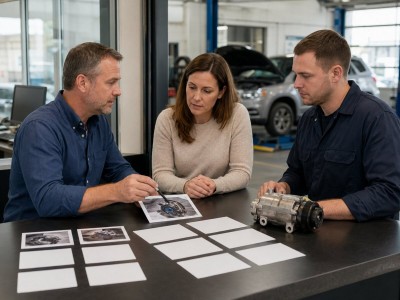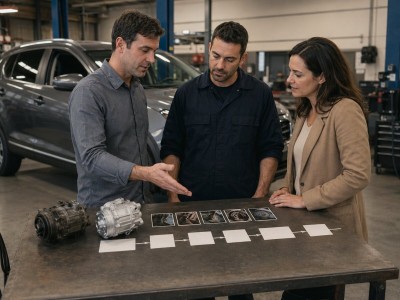


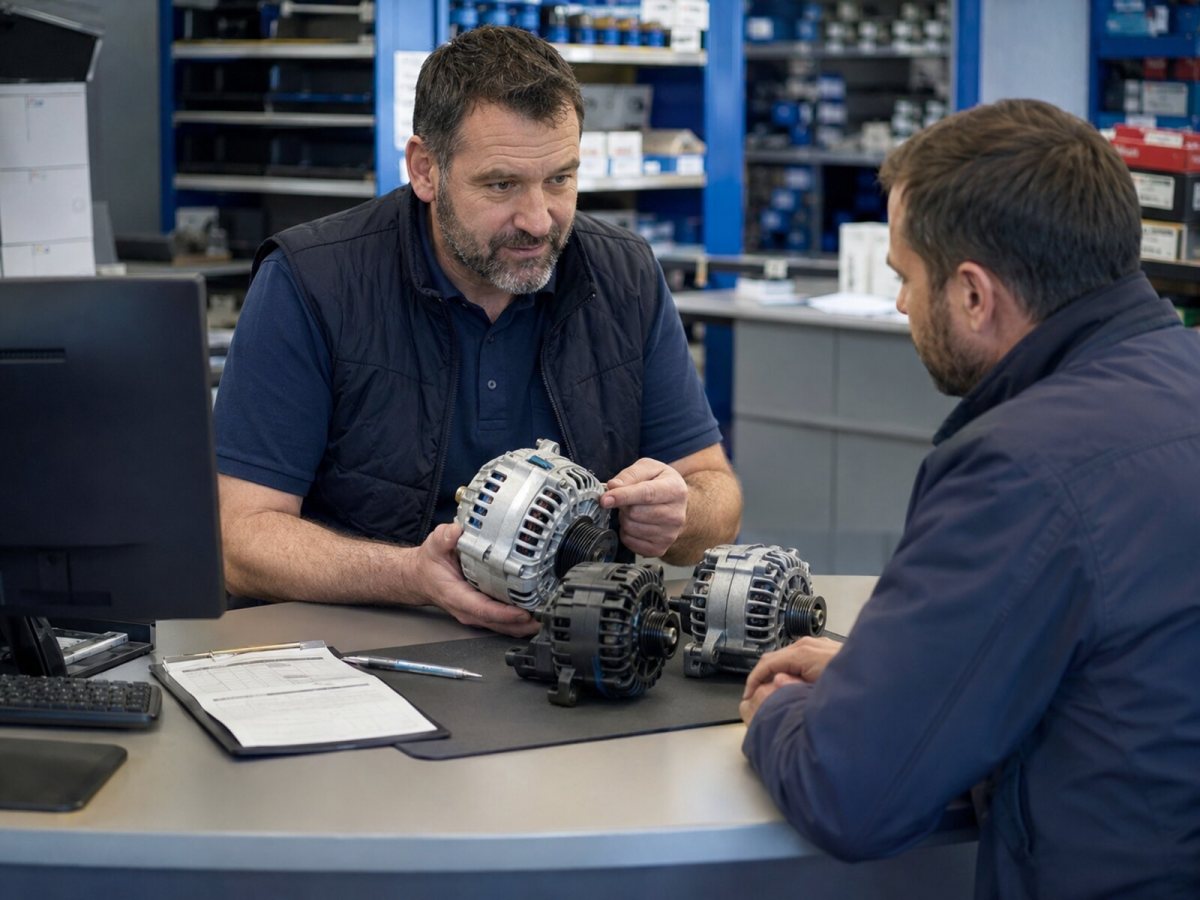
An auto parts specialist works with the customer, vehicle, catalogue, inventory, supplier feeds and orders at the same time. When every block sits in a different application, the employee becomes a manual integrator: copying VINs and part numbers, entering contacts again, comparing offers in notes and moving the result into the order.
The workstation should connect those actions into one process. This does not mean one enormous screen containing hundreds of fields. It means retained context: the system knows which customer and vehicle the search belongs to, where the OEM number came from, which option was approved and what happened after ordering.
Start with the path of a genuine enquiry
A typical request moves through customer and vehicle identification, VIN selection or known-number search, crosses and alternatives, availability, quotation, approval and order. Data from each preceding stage must remain available without re-entry.
| Work area | What staff see | Action supported |
|---|---|---|
| Customer | Contacts, enquiry history, purchases and vehicles | Continue without asking the same questions |
| Vehicle | VIN, model, specification and extra attributes | Select the exact search object |
| Selection | Assemblies, diagrams, OEM items, crosses and alternatives | Build justified choices |
| Availability | Owned stock, reservations and supplier offers | Compare price and credible lead time |
| Quotation | Brands, quantity, price and timing | Record the customer's decision |
| Fulfilment | Reservation, purchase, payment, picking and issue | Control the order to completion |
The search result must continue into the order
The main quality test is whether the flow remains connected after a part is found. If staff find an OEM item in a VIN catalogue, manually type it into another search and then copy the selected offer into CRM, the error risk remains.
A connected setup passes the item into the AutoParts registry, displays related products and commercial offers, then adds the chosen option to a quotation or order. Manufacturer, source, cost, selling price, lead time and vehicle relationship travel with the number.
The salesperson and specialist may be separate roles
In a small store, one person completes the whole process. In a larger organisation, the specialist owns technical accuracy, the salesperson owns communication, purchasing confirms the supplier and the warehouse issues the part. The system should support both structures without screenshots and part numbers sent through chats.
A task moves with its context. The next person sees the vehicle, original enquiry, selected items, comment and deadline. Their answer returns to the same enquiry rather than creating a parallel history.
Statuses should expose what blocks the sale
| Status | Meaning | Next action |
|---|---|---|
| Vehicle data required | VIN or another attribute is missing | Request the specific information |
| Selection in progress | Specialist is identifying OEM and choices | Complete technical verification |
| Quotation ready | Price, timing and options are prepared | Send to the customer |
| Decision pending | Customer received a defined version | Control the response deadline |
| Approved | Exact product and terms are selected | Reserve or purchase |
| In fulfilment | Goods are being picked or awaited | Control the promised time |
| Closed without sale | Customer declined or no item was found | Record the reason |
Owned stock and supplier availability are different
The salesperson should immediately understand what can be issued today, what is reserved and what is only reported by an external supplier. A supplier offer needs a last-update time, confirmation expectation and delivery lead time. When selected, its purchase remains connected to the customer order so the warehouse knows the intended recipient on arrival.
What management should measure
The workstation accelerates staff while creating management information. Useful control follows enquiries and their loss reasons rather than counting opened records.
| Metric | What it indicates | How to interpret it |
|---|---|---|
| Time to first quotation | Response speed | An increase may reveal search or workload problems |
| Enquiries with a found item | Catalogue coverage and selection quality | A fall exposes data gaps |
| Quotation conversion | Fit of price, timing and choices | Compare by enquiry type |
| Loss reasons | Where sales stop | Separate price, timing, absence and error |
| Compatibility returns | Technical decision quality | Investigate the source relationship |
| Margin after returns | Real commercial result | Do not judge by revenue alone |
Test the workstation before launch
Give staff real scenarios: VIN selection, OEM search, an unavailable original with an alternative, owned inventory and a supplier purchase. Measure time and manual copying, then confirm that the history remains after closing the working view.
The Business Reactor VIN module moves from vehicle to assemblies, diagrams and OEM items. AutoParts continues through the registry, crosses, alternatives, stock and offers. The complete connection appears in the solution for auto parts stores.
A good workstation does not replace specialist expertise. It removes re-entry, preserves the reason for each choice and carries technical selection through to a completed sale.