


Accounts receivable appears when goods are dispatched or services completed before cash is collected. Credit terms may increase sales, but the company finances the customer with its own cash. Without rules, revenue growth becomes a liquidity problem.
Control should not begin after an invoice is overdue. Before sale, determine who qualifies for credit, the amount, due date and consequence of a breach.
Separate current and overdue receivables
| State | Sign | Action |
|---|---|---|
| Current | Due date has not arrived | Confirm documents and remind before due date |
| Due today | Agreed date has arrived | Check receipt and contact under the procedure |
| Overdue | Date passed without full payment | Record cause, promise and next action |
| Disputed | Customer challenges amount or performance | Separate the disputed and undisputed portions |
| Doubtful | Contact lost or signs of financial distress | Escalate, review legally and recognise risk |
Credit policy before sale
For every customer segment, define qualification, credit limit, maximum term, required documents, approval role, stop-supply rule and review frequency.
Available credit = Approved limit − Current receivables − Confirmed unfulfilled credit orders.
The calculation must include current debt, booked orders and goods prepared for dispatch, not just historic payment behaviour.
Receivables ageing
| Age group | Meaning | Typical action |
|---|---|---|
| Not due | Planned future receipt | Confirm before due date |
| 1–7 days | Early delay or technical issue | Prompt contact and exact new date |
| 8–30 days | Systematic breach of terms | Management escalation and supply restriction |
| 31–60 days | High collection risk | Payment plan, documents and legal preparation |
| Over 60 days | Critical risk | Individual recovery and impairment decision |
Boundaries depend on the business and contract. The essential point is not to mix every debt into one total.
A promise to pay must be controlled
“Customer promised” is not enough. A promise needs an amount, date, contact, basis and responsible checker. If it is broken, the item returns to overdue status and its risk increases automatically.
The number of broken promises should influence the next credit limit more than a persuasive explanation.
Sales and finance roles
| Role | Responsibility | What must not happen |
|---|---|---|
| Sales adviser | Agree terms, maintain contact and know customer status | Move dates without a history |
| Finance | Confirm receipts, maintain ageing and procedure | Discover agreements in private chats |
| Manager | Approve exceptions, limits and escalation | Grant credit without total-risk visibility |
| Legal adviser | Review documents and recovery strategy | Join only after evidence has been lost |
Customer communication must be coordinated. Conflicting calls from sales, accounts and the director damage the relationship.
Example of prioritisation
Customer A owes UAH 300,000, five days overdue, confirms payment tomorrow and has always paid on time. Customer B owes UAH 90,000 for 45 days, has broken two promises and requests another dispatch.
A is larger by amount, but B has higher behavioural and ageing risk. Priority combines amount, age, history, promises, documentation and pending supply.
Communication sequence
- Before due date, confirm that invoice and documents were received.
- On due date, check payment and remind without accusation.
- After delay, obtain a specific reason, amount and date.
- After a broken promise, escalate and apply the approved restriction.
- For a dispute, record the issue, owner and resolution deadline.
- At high risk, preserve evidence and follow a legally appropriate process.
Specific legal measures depend on contract and jurisdiction and require qualified review.
Owner's measures
- total and overdue receivables;
- overdue share of credit sales;
- days sales outstanding;
- amount by ageing bucket;
- broken payment promises;
- credit-limit breaches;
- debt concentration among major customers;
- overdue balances by adviser, segment and product.
Common mistakes
- Credit is granted on an adviser's request. Total customer risk is hidden.
- Control starts after 30 days. The opportunity for a soft solution is lost.
- Dates change without history. Overdue debt disappears artificially.
- New dispatch continues automatically. Debt grows faster than collection.
- A disputed amount blocks the undisputed portion. Even accepted debt remains unpaid.
- Sales and finance use different data. The customer receives conflicting messages.
- High revenue justifies any balance. Margin may not cover default risk.
Receivables in Business Reactor
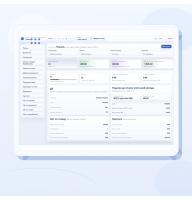
Business Reactor connects invoice, dispatch, payment, customer, adviser, credit limit and payment promise. Ageing uses the real due date, while date changes preserve history.
This allows realistic receipts to enter the payment calendar and stops risk increasing before another dispatch.
Conclusion
Receivable control starts before sale with policy, limit and due date. After dispatch, use ageing, specific promises, one accountable owner and agreed escalation. The objective is to collect cash while preserving healthy relationships.
Credit terms support sales only when their cost, limit and risk are controlled as carefully as price and margin. Business Reactor Finance & Accounting.