


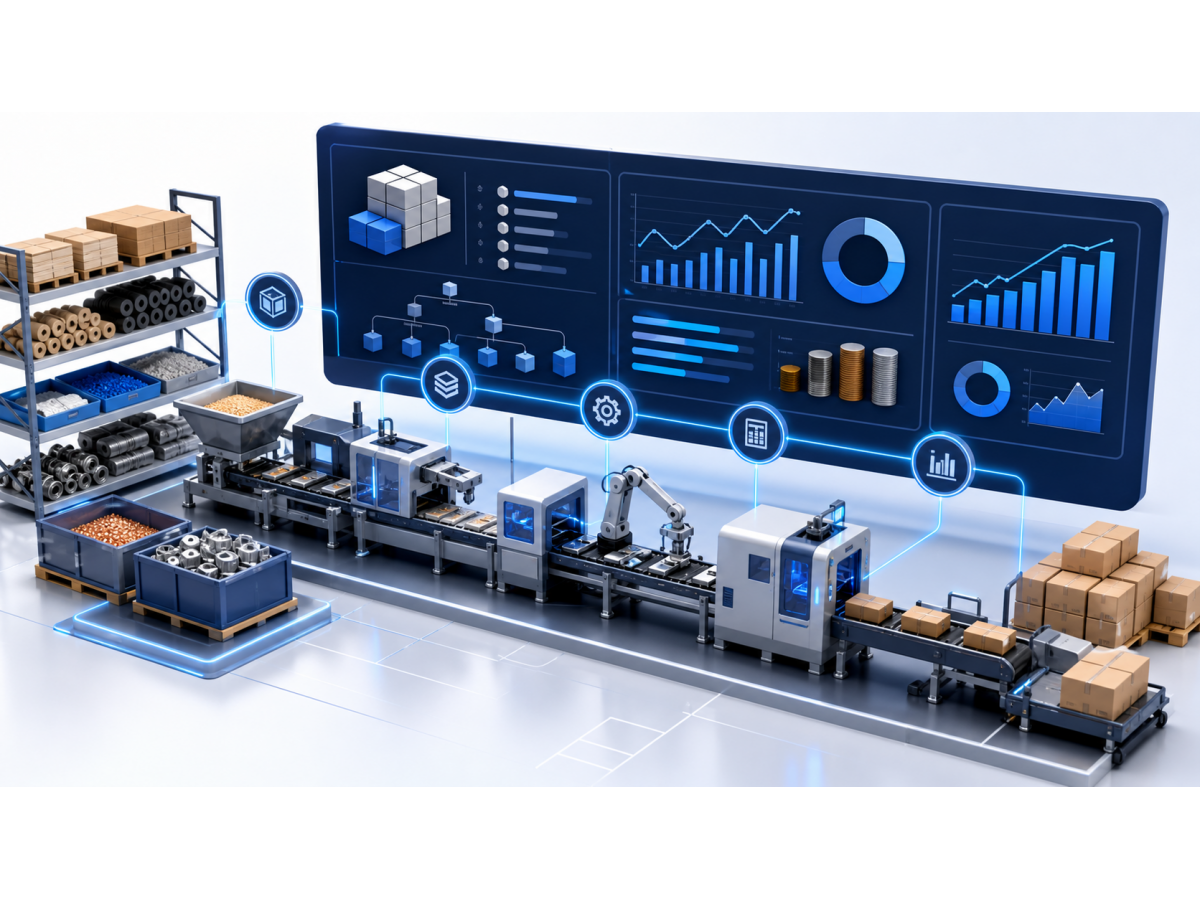
Small manufacturers often start with spreadsheets, the experience of key employees and manual control. That may work while order volume is low. As the product range grows, recurring questions appear: are enough materials available, what does the product really cost, which stage is an order at, and why does expected profit differ from the actual result?
Why a small manufacturer needs ERP
ERP connects sales, purchasing, inventory, production operations and financial indicators in one workflow. A small company does not need an oversized system. It needs a solution that reflects its real process and provides the tools required to plan and control output.
The main value appears when a customer order is connected to material demand, production tasks, actual expenses and finished goods.
Data that should work together
- Products and bills of materials. Each item has its required materials, components, operations and standard consumption.
- Inventory. The system shows available stock, reservations for production orders and future demand.
- Purchasing. Material shortages become a clear procurement plan instead of an emergency on the day production should start.
- Production tasks. The team sees priorities, owners, deadlines and the current stage.
- Actual costs. Consumed materials, time and additional expenses form the real cost of a batch or individual product.
Planned versus actual production cost
Planned cost supports pricing before work begins. It is calculated from the bill of materials, purchase prices and operating standards. Actual cost shows what was really consumed. Comparing the two reveals overuse, changing supplier prices, waste and inefficient operations.
Without this comparison, a company can increase revenue while losing margin. ERP makes deviations visible after a specific order or batch, not only at the end of a quarter.
How a production order moves through the system
- A manager confirms the customer order and expected completion date.
- The system checks the bill of materials and available stock.
- Available materials are reserved and shortages enter the purchasing plan.
- Production tasks are created with owners and stages.
- On completion, materials are consumed, finished goods are received and actual cost is recorded.
How to begin implementation
Start with one typical product or a small product group. Describe its bill of materials, workflow, control points and material consumption rules. Test the model on a real order, adjust it and only then extend it to the rest of the catalogue.
This approach creates value without stopping production. Explore our manufacturing automation capabilities and review implementation options.
The result for managers and teams
Management sees workload, shortages, deadlines and profitability. Production workers get clear tasks. Inventory works with reservations and documents, while sales can give the customer a reliable completion date. Business Reactor configures this workflow around each manufacturer’s process, from the first bill of materials to management analytics.